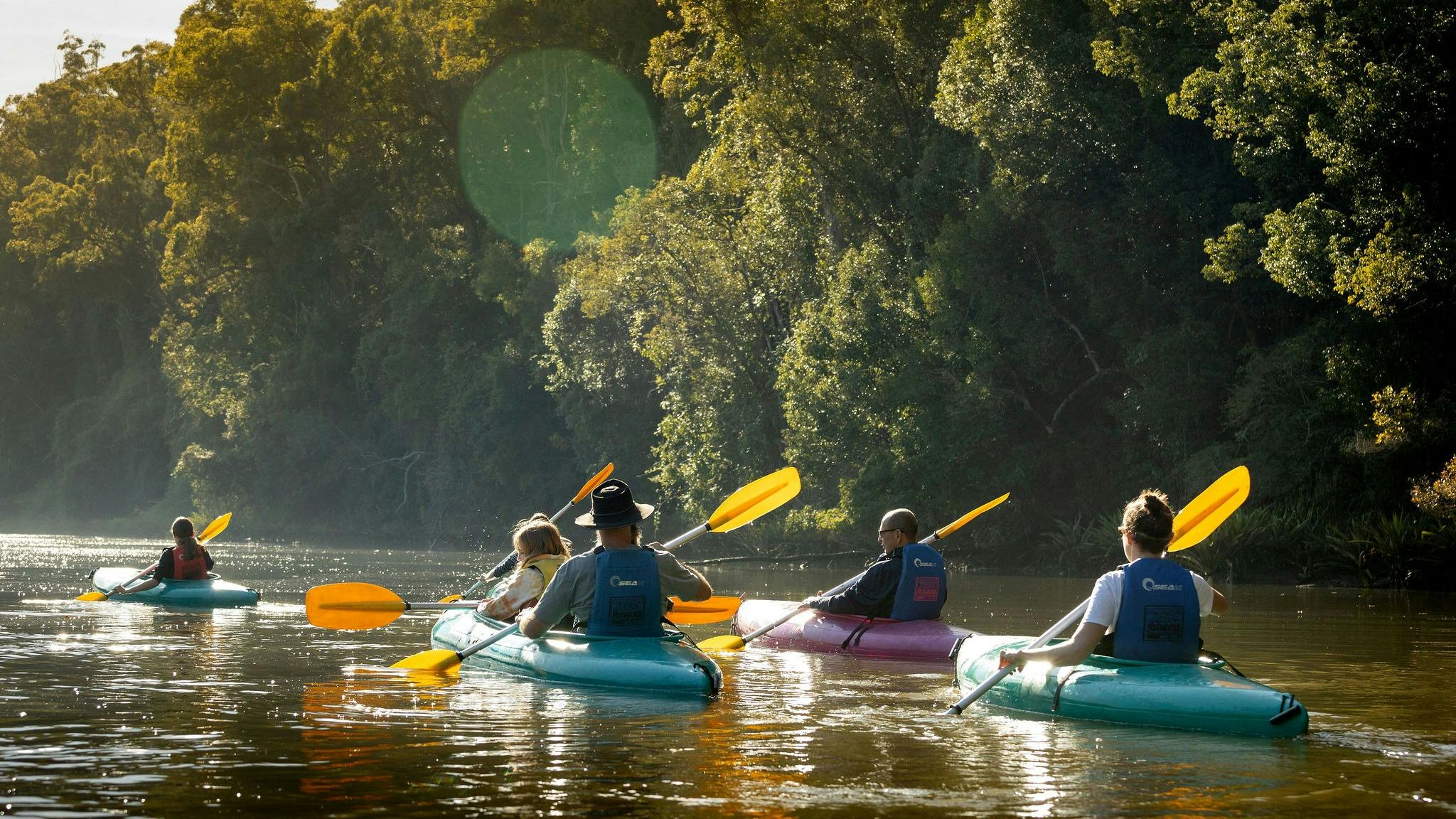
3. Derwent River, Tasmania
Hobart’s Derwent River offers an urban kayaking experience with beginner-friendly conditions. The river’s broad expanse ensures minimal current, while its scenic surroundings — from the city skyline to Mount Wellington’s backdrop — keep paddlers engaged. Launch points near Sandy Bay or the Royal Yacht Club are ideal, offering easy access to calm water, kayak rental options, and parking.
Advertising
Even in a city environment, the Derwent allows close encounters with nature. Swans, ducks, and occasional waterbirds provide interest along the shoreline, while early mornings present quiet waters ideal for learning balance and stroke technique. Paddlers can choose short, leisurely loops or venture farther downstream toward suburbs like Bellerive, where the combination of gentle water and accessible amenities makes this an ideal first kayaking experience. Beginners often appreciate the mix of urban convenience and natural charm, which encourages confidence without overwhelming complexity.
4. Lake Burley Griffin, Canberra, ACT
In the heart of Canberra, Lake Burley Griffin offers a tranquil, beginner-friendly kayaking environment. The lake is large but shallow, and winds are typically moderate, making it easy to navigate while enjoying the city’s unique vistas. Paddlers can glide past Parliament House, the National Gallery, and small islands dotted across the water, which are often home to nesting birds.
The lake’s design ensures accessibility and safety. Kayak rental services provide stable, easy-to-handle boats, and the flat water reduces the learning curve. Early morning paddlers often find themselves alone, with only the occasional rower or swan gliding alongside. Routes can be customized: short half-hour circuits near the launching points or longer loops that stretch across the lake. Beginners gain the dual benefit of developing paddling skills while experiencing Canberra’s carefully designed waterfront spaces in a reflective, calm setting.
5. Margaret River Estuary, Western Australia
Margaret River is famous for surfing and wineries, but its estuary is a haven for novice kayakers. The water here is typically calm, protected by sandbars and riverbanks, making it suitable for first-time paddlers. Early mornings are quiet, the water mirrors the sky, and the riverbanks are rich with native flora and fauna.
Along the estuary, paddlers might spot pelicans, black swans, and playful fish visible in the clear shallows. Mangroves line some sections, creating a sheltered corridor that feels almost secretive and removed from the busy tourist areas further downstream. Local operators often offer guided sessions, introducing beginners to paddling techniques and river ecology, but self-guided exploration is safe and rewarding. The gentle water and abundant scenery help build confidence and provide an immersive natural experience, demonstrating how kayaking can combine physical activity with reflective engagement with the environment.
Tips for Beginners
While these locations are well-suited for novices, preparation is essential for safety and enjoyment:
-
Choose calm water: Start with rivers, lakes, or sheltered bays rather than open ocean. Even mild wind or currents can affect balance and control.
-
Use appropriate equipment: Stable kayaks with wider beams are ideal for beginners. Paddle size, personal flotation devices, and comfortable seating are critical.
-
Check weather and tides: Early mornings often offer the calmest conditions, but it is important to verify forecasts, especially in coastal or estuarine areas.
-
Start short: Begin with a one- to two-hour route. Gradually increase distance as comfort and stamina improve.
-
Observe wildlife gently: Maintain distance, move slowly, and avoid loud noises to respect animals’ natural behavior.
-
Bring essentials: Water, sun protection, and a small dry bag for valuables enhance both safety and comfort.
The Joy of Gentle Exploration
For beginners, kayaking is not just about the physical activity; it is about a mindset of gentle exploration. Paddling allows for quiet observation, an opportunity to notice birds, plants, and water patterns that often go unseen from land. It encourages mindfulness, as every stroke demands attention and every moment on water brings a sensory connection to the surrounding environment.
Even a short morning paddle can feel transformative. The rhythm of dipping paddles, the sound of water lapping against the hull, and the sensation of floating in a living, breathing environment combine to produce calm, clarity, and satisfaction. Beginners quickly realize that the learning process itself — mastering balance, strokes, and turns — is as rewarding as reaching a specific destination.
Conclusion
Australia’s coastlines, estuaries, rivers, and lakes offer beginner kayakers a perfect blend of safety, beauty, and adventure. From the serene Everglades of Queensland to the urban tranquility of Lake Burley Griffin, from the estuarine charm of Margaret River to Pittwater’s sheltered waters, these routes allow novices to develop confidence, engage with nature, and enjoy the meditative pleasures of gentle paddling.
Starting a kayaking journey in these beginner-friendly areas ensures that the first strokes build skill, curiosity, and a sense of accomplishment. With patience, attention, and a spirit of gentle exploration, beginners can discover the thrill of moving through water, the satisfaction of connecting with wildlife, and the quiet joy of being fully present in Australia’s stunning natural landscapes.