Home Urban
Category:

Urban

Advertising

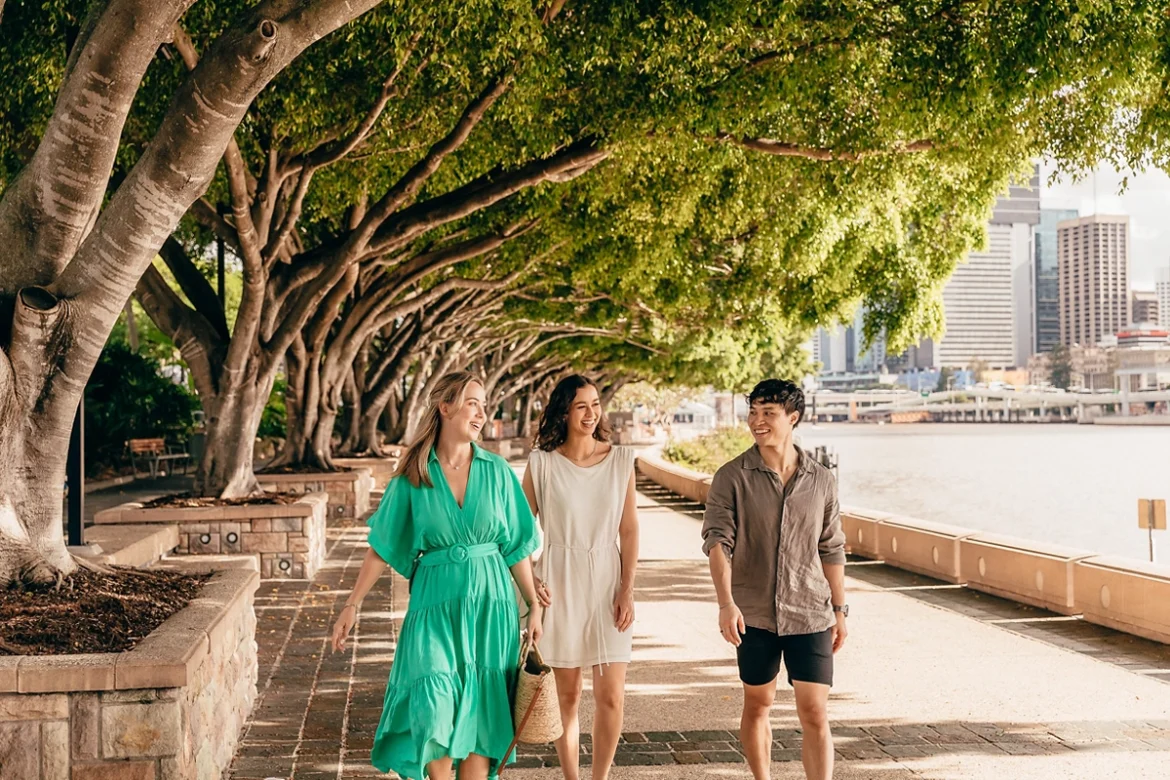
Brisbane is often admired for its riverside charm, but beyond the postcard images of ferries gliding past Story Bridge or the Botanic Gardens’ lush green lawns lies a city that invites slow, observant exploration. Its riverside districts — stretching from New Farm to South Bank, from the quieter inner suburbs to the bustling CBD edges — are places where the everyday becomes interesting when looked at closely. Cafes tucked behind office blocks, quiet footpaths along mangrove-lined riverbanks, and hidden art installations scattered throughout the precincts turn routine walks into discoveries.

The Brisbane River itself sets the stage. It is not just a body of water; it is the city’s central thread, weaving neighborhoods together with its calm stretches and lively edges. Early mornings along the river reveal a quiet city slowly waking. Joggers pass in rhythmic succession, kayaks cut through the still water, and the air carries a soft fragrance of jacarandas and eucalyptus from nearby parks. By afternoon, ferries, leisure boats, and the occasional tourist cruise animate the river, but if one turns into the quieter paths on the inner curves of the water, the pace slows again. It is here that many of the city’s hidden gems reside.

New Farm is one of Brisbane’s most notable riverside districts. During the day, New Farm Park attracts picnickers and dog walkers, but at twilight, it transforms. The sun casts long shadows across the lawns, and the architecture of nearby heritage homes — many converted into cafes, galleries, and boutique shops — gains a softer glow. The laneways behind the main streets harbor cafes that are easy to miss if you’re only walking the primary roads. A small espresso bar behind a row of shuttered apartments serves pastries baked on-site, while hand-painted signage hints at a creative ethos that permeates the neighborhood. In these corners, locals gather for coffee and conversation, while visitors pause to soak in the subtle blend of history and modernity.

Pages: 1 2

Advertising

In many cities around the world, the quiet rhythm of traditional craftsmanship once seemed destined to fade into memories. For decades, mass production shaped daily life, making handmade objects feel like relics of a distant past. Yet something unexpected is happening. Instead of disappearing, the old ways are returning — not as nostalgic decoration, but as a living, evolving practice. Small workshops run by dedicated artisans are giving traditional crafts a new pulse, inviting local communities to rediscover the value of slow, thoughtful creation.

This revival is neither a trend nor a fleeting curiosity. It grows from genuine interest in authenticity, story, and connection. When a person steps into a workshop that smells of wood shavings, clay, leather, or natural dyes, they are stepping into a space where things are made the way they were long before industrial machinery dictated pace and uniformity. And today, these workshops are appearing in unexpected corners — behind restored storefronts, in converted basements, on quiet side streets that rarely see tourist cameras.

Rediscovering Roots in a Rapid World

Many artisans involved in this revival did not inherit workshops from grandparents or follow a family business. Instead, they arrived after searching for meaning in their work. Some left office jobs to pursue weaving or dyeing. Others, curious about lost techniques, studied archives and old manuals. A number of artists learned their craft from elderly masters who feared their skills might vanish with time.

Take the example of Clara M., a ceramicist in Adelaide whose studio occupies a compact former laundry room behind her townhouse. She began with evening courses, fascinated by clay’s unpredictability. Now, her shelves display bowls and vases shaped with a subtle asymmetry, showing the mark of the hand. Clara can talk for hours about regional clay types, the history of glazes, and firing temperatures, but the essence of her work is simple: making objects that feel alive.

Or consider the tiny woodworking studio in the outskirts of Wellington run by father and son duo Thomas and Eli. They restore antique furniture using joinery methods that date back centuries — no synthetic fillers, no shortcuts. Their workshop is filled with the soft rasping sound of hand planes and a warm scent of linseed oil. They say their clients come not only for repairs but to learn how to care for pieces already in the family for generations.

Pages: 1 2

Advertising

Perth changes quietly when the sun goes down. The heat softens, the breeze from the Swan River becomes cooler, and familiar streets take on a different rhythm — slower in some corners, unexpectedly lively in others. For those who enjoy wandering without hurry, the city offers a surprising number of places that feel entirely different after dark. A night walk in Perth isn’t about rushing from point to point; it’s about noticing details that daytime light washes out, listening to sounds that usually hide behind traffic, and discovering how the city reveals itself when the crowds thin.

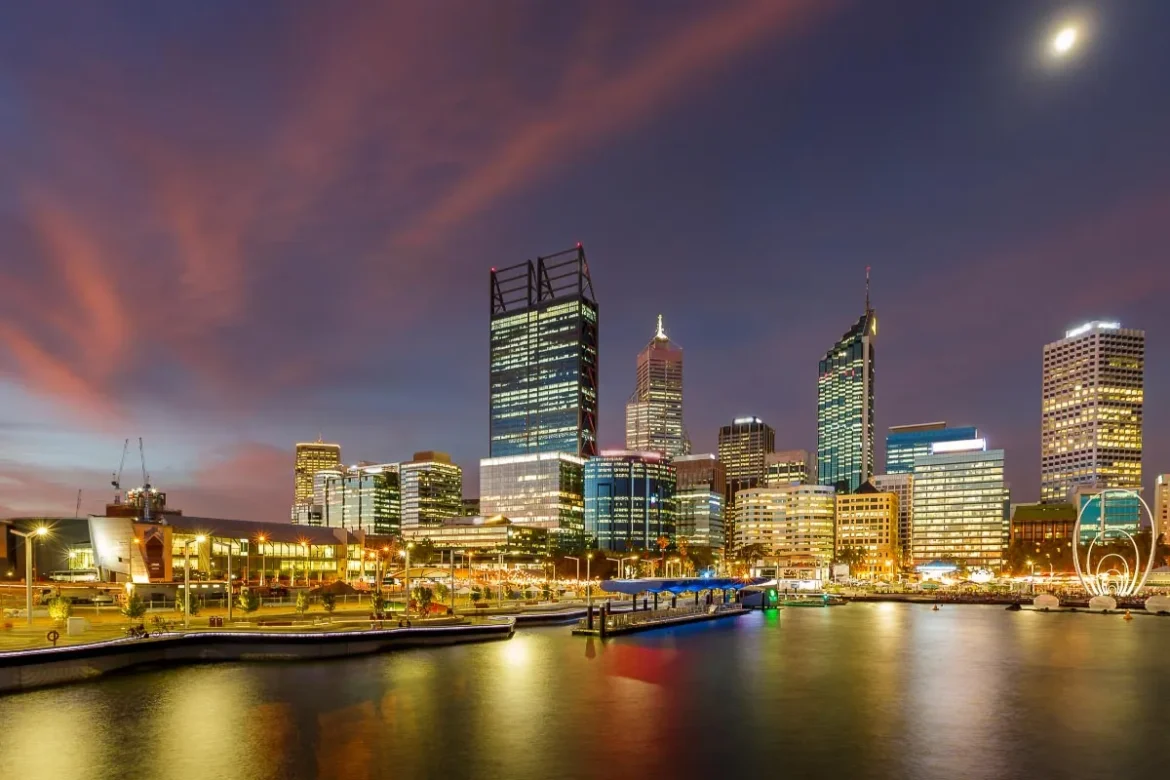
The best place to begin such a walk is often Elizabeth Quay. During the day, it’s bright and busy, but at night the water mirrors the lights of surrounding buildings in soft ripples. The pedestrian bridge, curved like a ribbon, becomes a gentle line of illumination across the river. Couples stroll quietly, cyclists glide past, and every so often a ferry pulls in, its lights briefly scattering across the water. Seagulls settle on posts, already half-asleep, and the air feels almost still. Standing here, with the skyline reflected below, you can sense the city reorganizing itself — less noise, more space, more room to breathe.

Following the river path westward leads to Riverside Drive, where traffic thins late in the evening. The city skyline appears sharper from this direction, especially when clouds drift slowly across the moon. Along the path, occasional joggers pass by with steady footsteps, but large stretches remain quietly open. The Swan River, dark and glassy at night, carries faint reflections of passing boats. The city feels close yet distant, a reminder that Perth’s urban life coexists with expanses of calm water that quietly define it.

A little farther inland lies Stirling Gardens, one of Perth’s oldest cultivated green spaces. At night, the gardens take on an entirely different character. Fig trees cast wide shadows, branches creating unpredictable silhouettes against the lit edges of nearby buildings. Possums emerge from hollows, moving along branches with deliberate slowness. The scent of soil becomes more noticeable, and the faint rustling of leaves replaces daytime chatter. The contrast between the quiet garden interior and the glow of the city around it forms a border where the natural and urban touch without clashing.

Pages: 1 2

Advertising

Sydney has always been a city shaped by movement — ships arriving, goods circulating through the docks, workers streaming in and out of industrial districts that once formed the backbone of its economy. For decades, large brick warehouses filled the inner suburbs, built to store wool, machinery, timber, and everything that passed through the busy harbours. Many of these buildings stood silent after industries changed and global logistics shifted away from the city centre. But instead of fading into the background, these structures have become stages for a new chapter in Sydney’s cultural life.

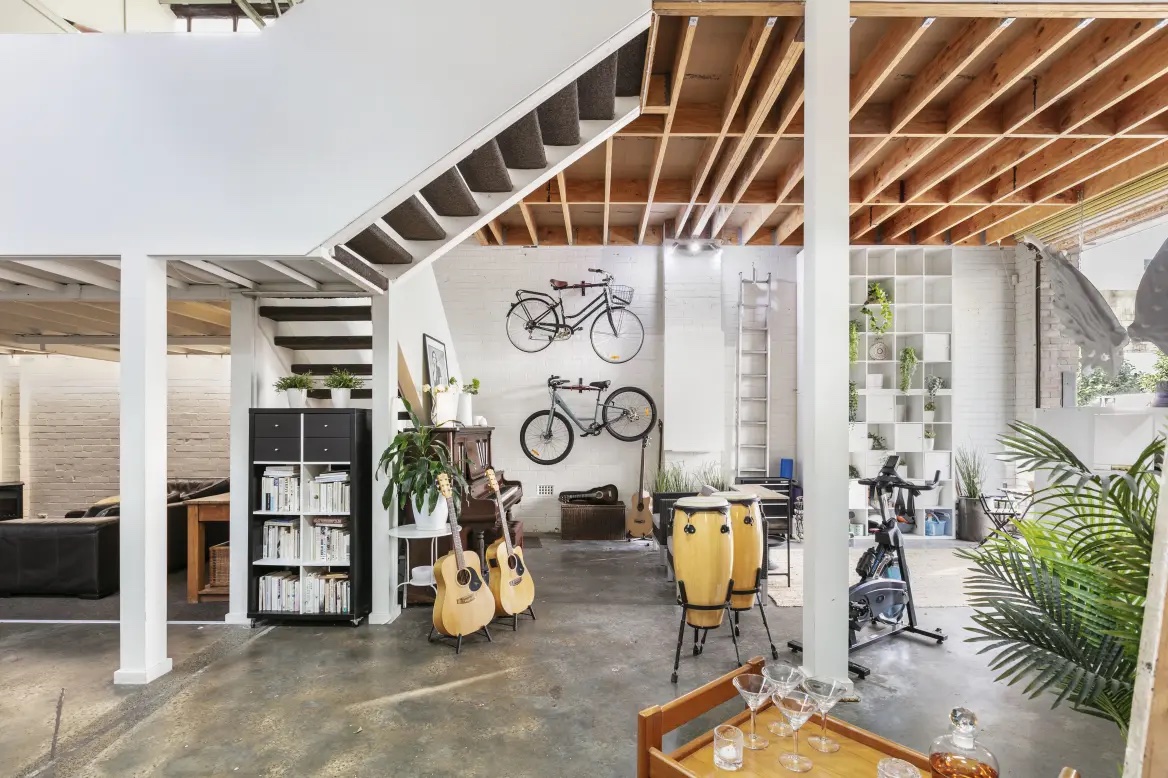
The transformation of old warehouses into creative hubs didn’t happen overnight. It began gradually, often without official plans or architectural strategies. Artists moved into forgotten spaces simply because the rent was manageable and the rooms were vast. Designers and musicians followed, drawn to the freedom of large floors and high ceilings where noise, experimentation, and collaboration could unfold without disturbing anyone. Over time, these early adopters planted the seeds of a movement that still shapes the city today.

One of the most telling areas to witness this evolution is Chippendale, a neighbourhood once dominated by factories and storage buildings. For much of the 20th century, the district carried a utilitarian feel: red brick walls, narrow service lanes, loading docks scattered behind large metal doors. At first glance, these weren’t spaces one might imagine hosting art studios or galleries. But when industries relocated and buildings sat half-empty, a new wave of creators slowly repurposed the district’s architecture.

The shift became especially visible when the former Carlton & United Breweries site started its redevelopment in the early 2000s. As the surrounding blocks adapted, small collectives and independent galleries found opportunity in adjacent warehouses. These early studios often operated with modest means: mismatched furniture, shared work tables, repurposed industrial lighting. Yet within these interiors, a new cultural identity grew — one shaped by collaboration, curiosity, and a willingness to work with what was already there.

Pages: 1 2

Advertising

Melbourne has a way of surprising even those who think they know it well. At first glance, the city looks structured and predictable: wide streets forming a tidy grid, trams gliding along familiar routes, people drifting between offices, markets, and waterfront views. But anyone who has wandered past the main roads knows there is another Melbourne tucked away behind it — intimate, layered, playful, and endlessly curious. This city hides its most memorable experiences not on its grand boulevards but in narrow lanes where the walls never stay the same and where the aroma of coffee seems to rise from the very stones.

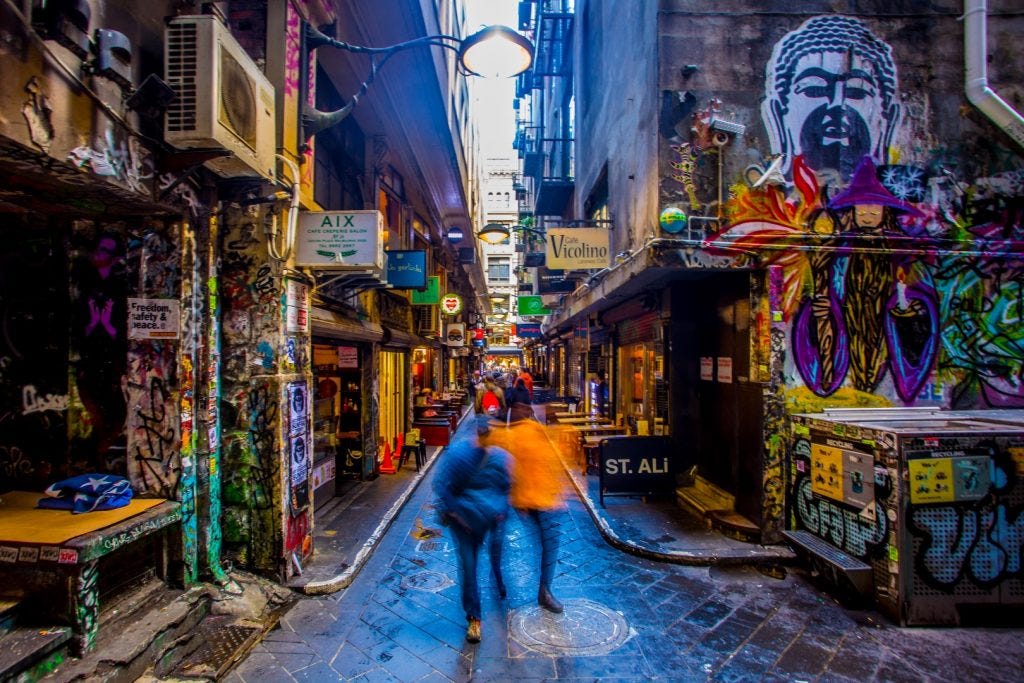
The laneways are not an accidental quirk. They reflect the way Melbourne has grown, shrunk, expanded again, and reinvented itself through time. Many were originally service alleys for shops and warehouses in the 19th century, rarely intended for the crowds they attract today. When walking through them now, it’s easy to notice traces of this past: brick walls with uneven patterns, small doors that once led to storage rooms, metal window frames older than most of the buildings that surround them. As the decades passed, these narrow passages became the city’s creative lungs — a space where experimentation flourished because no one was watching too closely.

One of the most beloved of these lanes is the now-iconic Hosier Lane, famous for its ever-changing street art. Visitors often imagine that the murals remain in place for years, but anyone who returns after just a few weeks is likely to find an entirely new canvas. The artworks are layered not only in paint but in meaning: references to social issues, local humor, abstract explorations, and the unpredictability of collaborative creation. The lane functions as a public sketchbook. Artists add their work knowing full well that it may be covered tomorrow, and this embrace of impermanence gives Hosier Lane its particular energy. People stop to look, not because they expect perfection, but because they expect change.

Pages: 1 2

Advertising