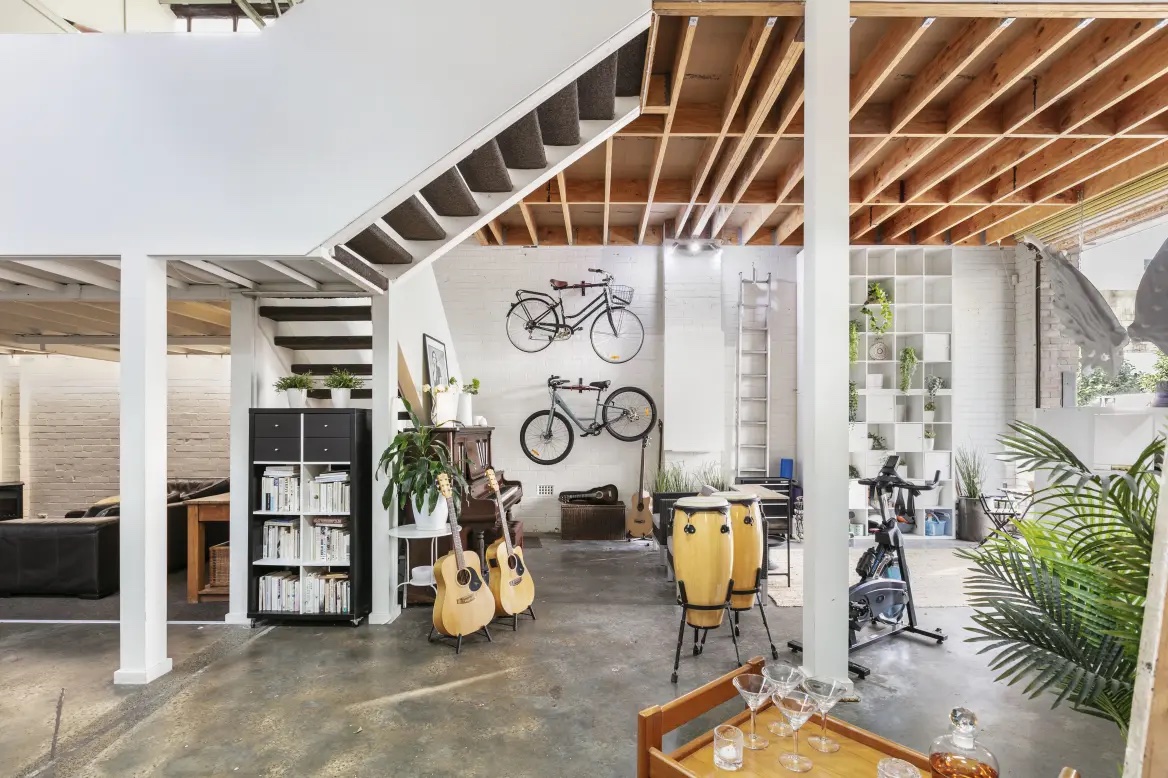
Sydney has always been a city shaped by movement — ships arriving, goods circulating through the docks, workers streaming in and out of industrial districts that once formed the backbone of its economy. For decades, large brick warehouses filled the inner suburbs, built to store wool, machinery, timber, and everything that passed through the busy harbours. Many of these buildings stood silent after industries changed and global logistics shifted away from the city centre. But instead of fading into the background, these structures have become stages for a new chapter in Sydney’s cultural life.
Advertising
The transformation of old warehouses into creative hubs didn’t happen overnight. It began gradually, often without official plans or architectural strategies. Artists moved into forgotten spaces simply because the rent was manageable and the rooms were vast. Designers and musicians followed, drawn to the freedom of large floors and high ceilings where noise, experimentation, and collaboration could unfold without disturbing anyone. Over time, these early adopters planted the seeds of a movement that still shapes the city today.
One of the most telling areas to witness this evolution is Chippendale, a neighbourhood once dominated by factories and storage buildings. For much of the 20th century, the district carried a utilitarian feel: red brick walls, narrow service lanes, loading docks scattered behind large metal doors. At first glance, these weren’t spaces one might imagine hosting art studios or galleries. But when industries relocated and buildings sat half-empty, a new wave of creators slowly repurposed the district’s architecture.
The shift became especially visible when the former Carlton & United Breweries site started its redevelopment in the early 2000s. As the surrounding blocks adapted, small collectives and independent galleries found opportunity in adjacent warehouses. These early studios often operated with modest means: mismatched furniture, shared work tables, repurposed industrial lighting. Yet within these interiors, a new cultural identity grew — one shaped by collaboration, curiosity, and a willingness to work with what was already there.