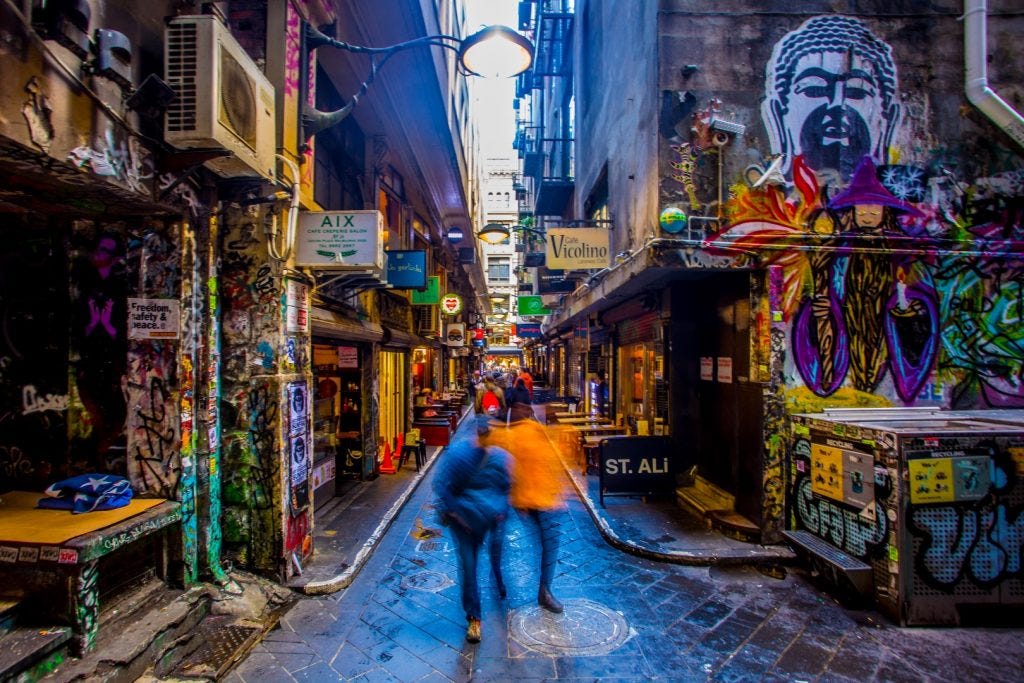
Melbourne has a way of surprising even those who think they know it well. At first glance, the city looks structured and predictable: wide streets forming a tidy grid, trams gliding along familiar routes, people drifting between offices, markets, and waterfront views. But anyone who has wandered past the main roads knows there is another Melbourne tucked away behind it — intimate, layered, playful, and endlessly curious. This city hides its most memorable experiences not on its grand boulevards but in narrow lanes where the walls never stay the same and where the aroma of coffee seems to rise from the very stones.
Advertising
The laneways are not an accidental quirk. They reflect the way Melbourne has grown, shrunk, expanded again, and reinvented itself through time. Many were originally service alleys for shops and warehouses in the 19th century, rarely intended for the crowds they attract today. When walking through them now, it’s easy to notice traces of this past: brick walls with uneven patterns, small doors that once led to storage rooms, metal window frames older than most of the buildings that surround them. As the decades passed, these narrow passages became the city’s creative lungs — a space where experimentation flourished because no one was watching too closely.
One of the most beloved of these lanes is the now-iconic Hosier Lane, famous for its ever-changing street art. Visitors often imagine that the murals remain in place for years, but anyone who returns after just a few weeks is likely to find an entirely new canvas. The artworks are layered not only in paint but in meaning: references to social issues, local humor, abstract explorations, and the unpredictability of collaborative creation. The lane functions as a public sketchbook. Artists add their work knowing full well that it may be covered tomorrow, and this embrace of impermanence gives Hosier Lane its particular energy. People stop to look, not because they expect perfection, but because they expect change.