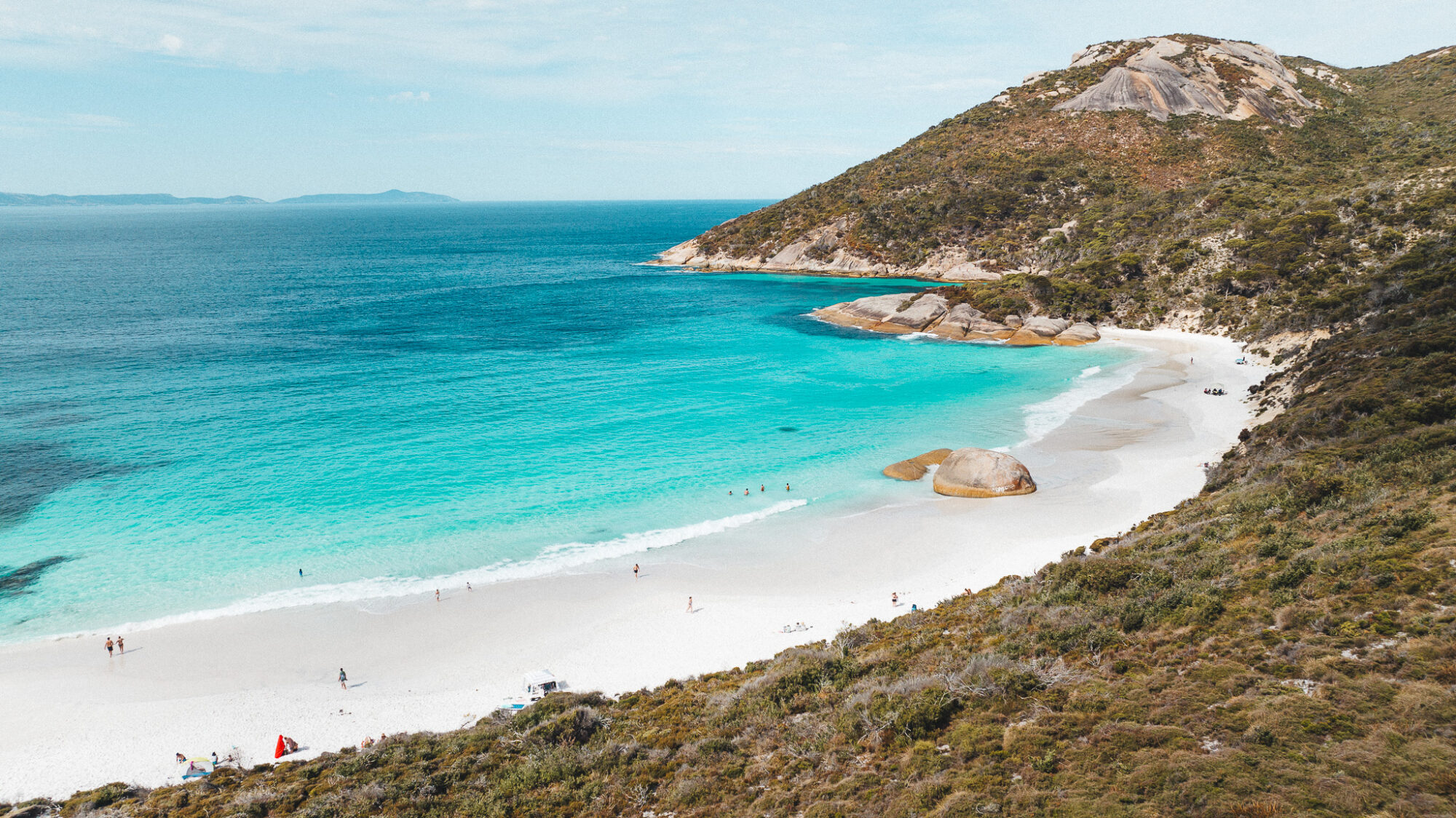
2. Wedge Island, Coral Bay
Wedge Island near Coral Bay offers an intimate marine environment with calm waters and vibrant coral reefs. While the area is known for snorkeling, its quiet coves and shallow lagoons are ideal for travelers seeking a slower pace. Early-morning light illuminates the reefs beneath glass-clear water, and snorkelers can observe coral, small reef fish, and occasionally rays gliding gracefully just below the surface.
Advertising
Beyond the water, the shoreline encourages slow exploration. Walking along the white sands, noticing the patterns left by waves, or watching seabirds returning from early fishing trips engages all the senses. Even minimal movement — adjusting a towel, wading slowly into shallow water, or pausing to watch the light change — can feel profoundly restorative. Wedge Island exemplifies slow travel, where the experience is measured not in activities but in mindfulness, observation, and presence.
3. Smiths Beach, Yallingup
Smiths Beach, part of the broader Yallingup coastline, is famous for its surf breaks, yet tucked into its northern cove is a quieter zone often overlooked by surfers. This bay is ideal for slow mornings, where travelers can take gentle walks along soft sand, pick up seashells, or simply sit and watch waves rolling in rhythmically.
Wildlife is subtle but present: shorebirds probe the sand, occasional dolphins may be spotted offshore, and lizards dart between dune vegetation. For those interested in photography or sketching, the interplay of light and water provides endless inspiration. Unlike more crowded beaches, Smiths Beach offers solitude — a space to feel the passage of time without schedules or crowds, embodying the essence of slow travel.
4. Cosy Corner, Denmark
Further south, Cosy Corner near Denmark offers a combination of pristine sands, gentle waves, and a sense of seclusion. The bay is bordered by limestone cliffs and lush vegetation, creating natural frames for observation. Unlike busier beaches in the area, Cosy Corner remains calm throughout the day, especially in the morning and late afternoon.
Walking along the shoreline, travelers can pause frequently to inspect tide pools, listen to the wind through coastal shrubs, or observe seabirds in their quiet rituals. For slow travel enthusiasts, the bay encourages extended engagement: a picnic on the sand, a sketching session overlooking the cliffs, or even meditative contemplation of the rhythm of the surf. Every moment spent here emphasizes presence and connection, transforming a simple visit into a mindful experience.
5. Conto Bluff, Esperance Region
In the south-east, Conto Bluff offers a different kind of slow-travel experience. Here, the coastline is rugged yet approachable, with small bays interspersed between rocky outcrops. Early mornings reveal soft light reflecting off pale sand and azure water, while the sound of the surf dominates the landscape in a gentle, hypnotic rhythm.
Visitors can follow narrow paths to small inlets where the tide gently laps at sheltered beaches. Wildlife is abundant: seals sun themselves on rocks, seabirds swoop in synchronized patterns, and occasional fish leap just offshore. Slow travel here involves careful observation, quiet movement, and a willingness to linger — walking less but noticing more. It is a space where the natural world dictates pace, and visitors simply flow with it, learning from its quiet consistency.
The Principles of Slow Travel on Western Australia’s Shores
Slow travel is not simply about moving slowly; it is about engaging with an environment in a way that prioritizes observation, mindfulness, and presence. On Western Australia’s quieter bays, this approach allows travelers to:
-
Notice wildlife and plant life: Observe interactions between species, study footprints, and appreciate subtle ecological details.
-
Engage with tides and light: The changing tide and shifting sunlight alter the appearance of sand, water, and cliffs, rewarding repeated observation.
-
Embrace solitude: Fewer people mean more mental space, a chance to hear wind and water without distraction.
-
Move mindfully: Whether paddling a kayak, walking along the beach, or simply sitting, focus on gentle, deliberate movement.
By approaching these bays with intention, visitors gain deeper satisfaction than through rushed sightseeing. Each moment becomes a chance to appreciate textures, colors, sounds, and scents — the small details that make slow travel so enriching.
Practical Tips for Enjoying Quiet Bays
-
Timing matters: Early morning and late afternoon provide optimal light, calm waters, and fewer people.
-
Pack lightly: Essentials include water, sunscreen, a hat, a small snack, and perhaps a journal or sketchbook.
-
Respect nature: Avoid disturbing wildlife, leave no trace, and follow local guidelines for protected areas.
-
Stay flexible: Slow travel is about experiences, not schedules. Allow time to pause, observe, and adjust plans according to weather and mood.
-
Explore on foot or kayak: Short walks, gentle paddling, or simply sitting on the sand enhances engagement with surroundings.
Conclusion
Western Australia’s quiet bays provide an ideal setting for slow travel — spaces where time stretches, senses heighten, and the natural world feels immediate and intimate. From Eagle Bay’s sheltered lagoon to Wedge Island’s coral-lined coves, from Smiths Beach and Cosy Corner to Conto Bluff’s rugged beauty, these destinations invite mindful exploration.
Travelers who embrace slow movement, gentle observation, and patient engagement discover that the shore is more than a place to pass through. It becomes a sanctuary where every ripple, shadow, and birdcall tells a story, and where the rhythms of water, wind, and light teach a quieter, more satisfying pace. By choosing to linger, notice, and participate gently in the environment, visitors transform ordinary mornings into lasting memories of connection, reflection, and natural beauty.