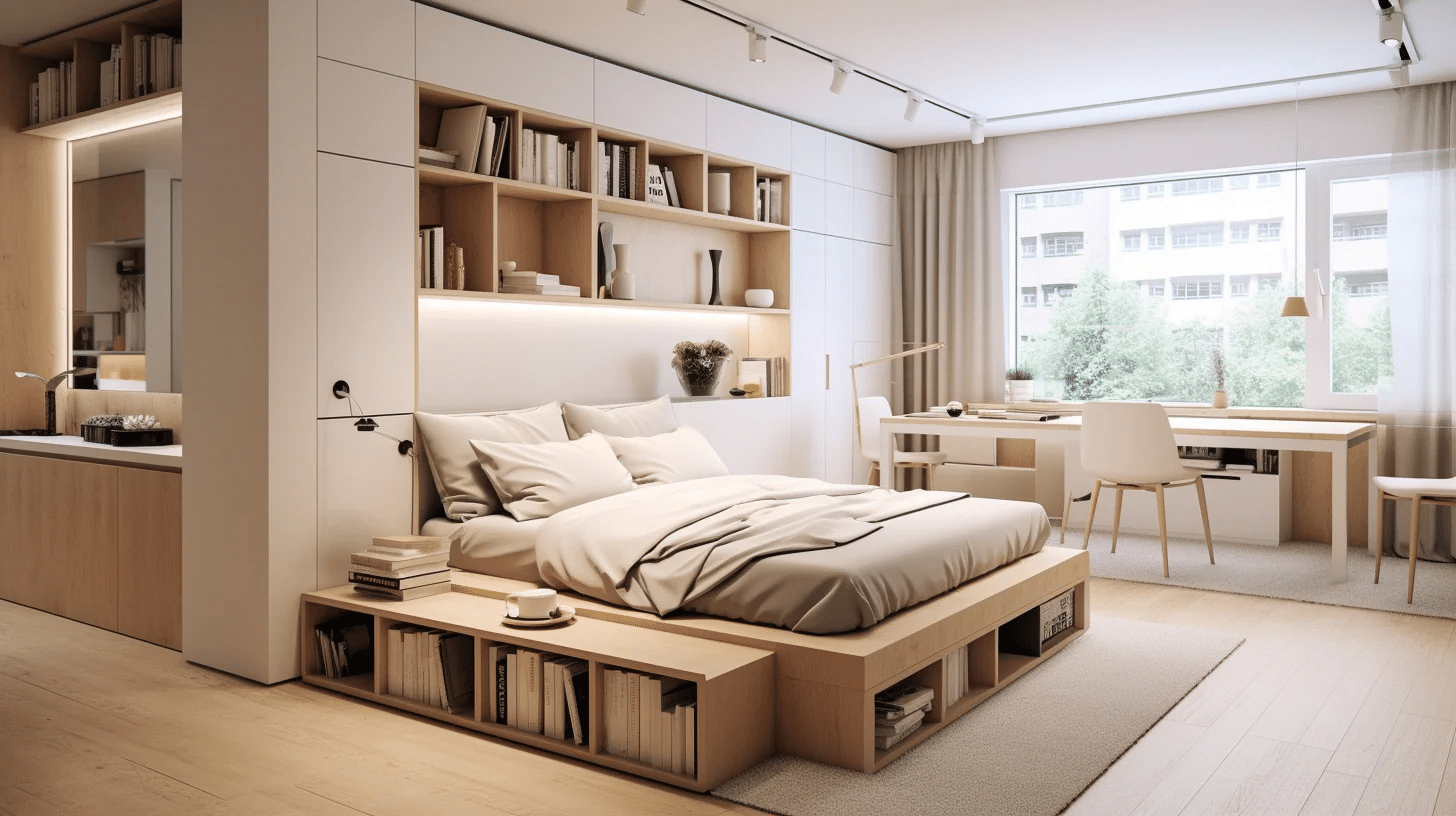
2. Multi-Functional Furniture
Furniture that serves multiple purposes is a hallmark of small-space design. Beds with drawers underneath, coffee tables with storage compartments, and ottomans that double as seating and storage allow homeowners to maintain functionality without sacrificing style.
Advertising
Designers in Australia frequently use timber, rattan, and soft textiles for these pieces, ensuring that storage feels integrated rather than imposed. A bench in an entryway may provide seating while concealing shoe storage; a dining table can fold or extend, revealing hidden drawers for cutlery or linens. Multi-functional furniture keeps spaces uncluttered and promotes a sense of calm, which is especially important in compact living areas.
3. Open Shelving With Natural Materials
Open shelving is a versatile storage option that can make small spaces feel airy and connected to the surroundings. Rather than enclosing items behind doors, carefully arranged shelves allow objects to become part of the room’s aesthetic. In coastal-inspired or contemporary Australian interiors, shelves made of light timber or bamboo can display plants, ceramics, books, or textiles, creating a natural, curated look.
The key to success with open shelving is organization. Items are grouped thoughtfully, often by color or function, and only essentials are displayed to avoid visual clutter. This approach not only maximizes storage but also encourages mindfulness in the objects we keep and how we present them.
4. Hidden Niches and Recesses
Architects and interior designers often create hidden niches that utilize underused corners or recesses. For example, a shallow wall cavity can house a pantry or a set of drawers, while an alcove in a living room can hold baskets for blankets and magazines.
Australian designers also exploit vertical space, turning tall, narrow walls into storage for books, plants, or kitchenware. These niches feel natural because they follow the lines of the architecture rather than forcing new structures into the room. They create small moments of surprise and utility, making even a compact home feel full of possibilities.
5. Natural Textures to Integrate Storage
A defining element of natural-feeling storage is the use of materials that harmonize with the interior environment. Timber, rattan, wicker, linen, and jute are common choices in Australian homes. Baskets, woven boxes, and wooden crates provide practical storage while maintaining an organic aesthetic.
These textures soften the hard lines of cabinetry and shelves, making storage an attractive feature rather than a purely functional necessity. For instance, a stack of wicker baskets under a console table can hold toys or linens while adding visual warmth, blending storage seamlessly with décor.
6. Creative Wall Solutions
Walls are a valuable canvas in small-space design. Pegboards, hooks, and rail systems allow flexible storage for kitchen tools, stationery, or even art supplies. In bathrooms, wall-mounted shelves and towel racks keep essentials accessible without crowding surfaces.
Australian designers often use these solutions with timber accents or natural metal finishes, ensuring that they feel integrated with the overall interior rather than an afterthought. The vertical use of space draws the eye upward, giving the impression of height and openness even in a compact room.
7. Sliding and Folding Elements
Sliding doors, folding screens, and retractable panels are essential tools for concealing storage without sacrificing floor space. Sliding doors can hide wardrobes, pantries, or laundry areas, while folding panels can create temporary privacy or reveal hidden desks or storage units.
This approach is particularly effective in apartments or townhouses, where every square meter counts. By combining movement and adaptability, these solutions make a small space feel dynamic, functional, and uncluttered.
8. Storage That Enhances Lifestyle
Good storage is more than organization; it supports lifestyle. In a home office, floating shelves and hidden drawers allow work to coexist with relaxation. In kitchens, cleverly designed cabinets enable cooking and entertaining to feel effortless. In living rooms, storage that doubles as seating encourages social interaction while keeping clutter out of sight.
Australian homeowners increasingly treat storage as a design opportunity rather than a necessity, ensuring that it complements the way spaces are used rather than dictating it. This philosophy leads to homes that feel calm, intentional, and connected to daily life.
Conclusion
Small spaces need not feel constrained. Clever, natural-feeling storage solutions transform compact homes into airy, functional, and beautiful environments. By blending built-ins, multi-functional furniture, open shelving, hidden niches, and natural materials, Australian designers create interiors that are organized, harmonious, and visually pleasing.
These solutions do more than maximize space; they enhance the way residents live. They allow rooms to feel open, light-filled, and welcoming, while seamlessly integrating the objects that make a house a home. Thoughtful storage in small spaces embodies both practicality and style, proving that with careful design, even the most modest area can become a place of comfort, creativity, and natural beauty.