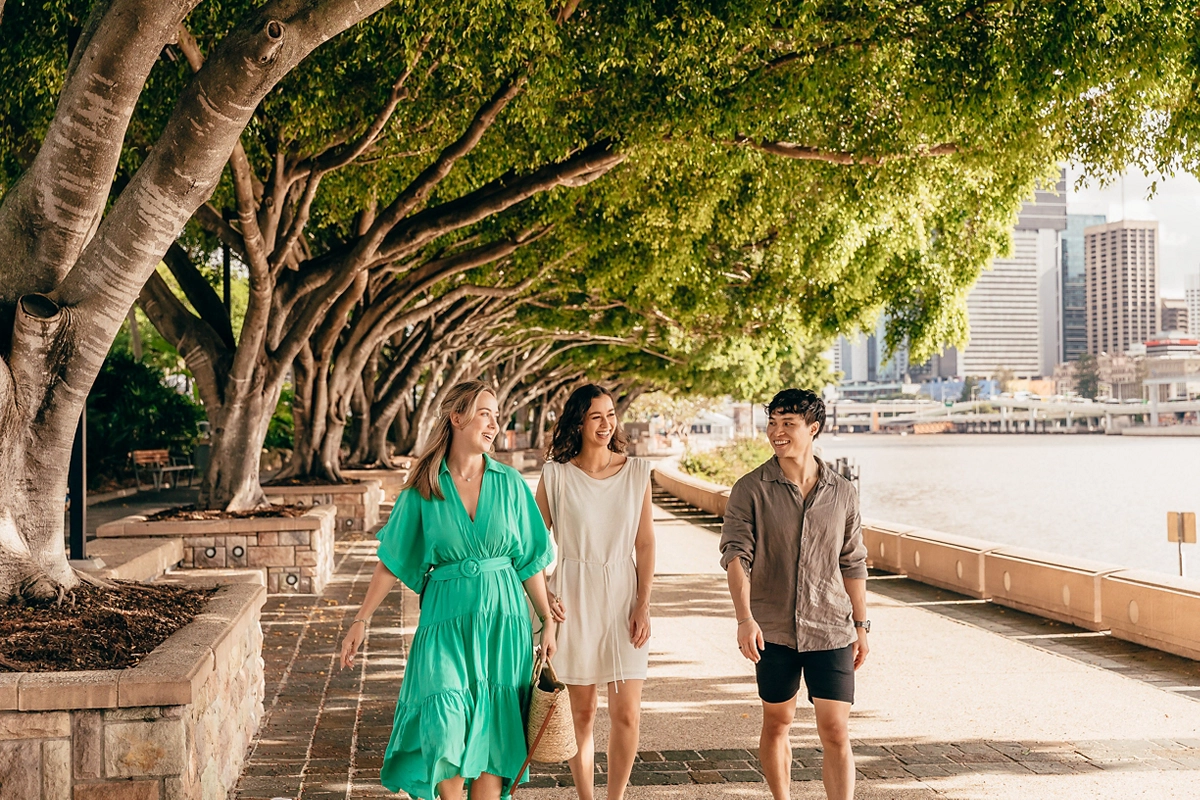
Venturing west, Howard Smith Wharves provides a unique riverside experience. Originally built as industrial wharves, this area has been transformed into a mixed-use precinct with dining, leisure, and creative spaces. Walking along the boardwalk, one notices layers of history — steel beams still in place, concrete floors showing decades of wear, and mooring posts from an era when ships would unload timber and coal. Today, the space is lively, yet retains echoes of the past. Cafes spill onto the riverfront, artisanal bars experiment with local ingredients, and occasional live music performances animate the evening air. Here, the everyday — a riverside stroll — becomes an immersive experience, blending industrial memory with contemporary creativity.
Advertising
Across the river lies South Bank, perhaps Brisbane’s most celebrated riverside district, yet even here, everyday spots reveal themselves differently when approached attentively. The promenade can feel crowded during weekends, but early weekday mornings offer an entirely different perspective. Strolling past the public library and the Queensland Performing Arts Centre, one can discover small seating areas tucked behind sculptures, miniature gardens that often go unnoticed, and murals that brighten the walk. Street performers, practicing quietly or performing for small audiences, add another layer of life that is easy to overlook in a rush. Cafes with minimal signage attract locals seeking quiet mornings; each one has its own personality reflected in coffee blends, furniture choices, and the subtle curation of art on the walls.
Eagle Street Pier also benefits from closer inspection. From a distance, it might seem like a cluster of restaurants and bars catering to business lunches and riverfront dinners. However, smaller pathways and hidden staircases lead to intimate balconies overlooking the river. From here, one can watch the ferries glide by, catch glimpses of local waterbirds, and even notice small groups of people sketching or reading quietly. These micro-views of the city provide moments of pause and reflection, transforming what might otherwise be a standard dining or shopping experience into something richer and more personal.
Beyond the main tourist-focused areas, riverside neighborhoods like Bulimba and Newstead offer subtle discoveries. Bulimba, with its quaint streets and small riverside parks, has laneways where local artists showcase work on walls or in tiny pop-up exhibitions. A narrow street might hide a workshop selling hand-crafted furniture or a small gallery highlighting Indigenous art. Newstead’s former industrial areas, now home to boutique apartments and creative studios, blend the old and new. Walking these streets at different times of day, one notices the juxtaposition of warehouses converted into design studios, subtle murals reflecting community stories, and riverside paths lined with plants that encourage slow walking and observation.
Even the smallest riverside paths hold charm. Along sections of Kangaroo Point, a trail runs parallel to the cliffs overlooking the river. The path’s curvature frames both water and cityscape, offering changing views with each step. Small benches provide resting points, and discreet signage tells stories of the area’s geological and Indigenous heritage. While often overlooked in favor of climbing the cliffs for panoramic views, these paths provide a unique intimacy: a way to experience Brisbane as locals do, moving at a human pace, noticing the subtle shifts in light, sound, and scent along the river.
Food and beverage spots are particularly integral to the riverside experience. Many cafes and bars have embraced the subtle charm of their surroundings rather than competing with flashy branding. At New Farm, a small bakery emphasizes local grains and seasonal produce, presenting pastries that change daily with minimal fuss but maximum attention to flavor. At Howard Smith Wharves, a bar specializing in native herbs and botanicals offers riverside seating that catches breezes off the water, blending the sensory experience of taste with sight and smell. It is these everyday, human-scale details that define the character of Brisbane’s riverside districts.
Art and design also punctuate everyday spaces. Sculptures and murals are frequently interspersed between parks, pedestrian bridges, and laneways, subtly integrated into areas that might otherwise seem purely functional. Often, these installations reference local history or the river itself, embedding narratives that reveal themselves over repeated visits. Small creative interventions, like hand-painted signage or interactive art pieces in laneways behind South Bank, invite engagement, encouraging locals and visitors to look closer at spaces they might pass by without noticing.
Nightfall further transforms the riverside. Brisbane’s skyline reflects on the water in shades of gold and violet, and streetlights create elongated shadows along paths. Cafes and bars light up with warm, inviting glows, while quieter paths allow the sounds of the river and night birds to dominate. A walk along New Farm’s riverfront at twilight can feel different from the day, emphasizing solitude and reflection rather than activity and movement. Even familiar routes become fresh, offering a chance to experience the same geography from a new perspective.
The riverside districts also host cultural and community events that enrich everyday experiences. Weekly farmers’ markets, small open-air concerts, and community fitness classes animate the districts without overwhelming them. Observing these events while walking allows visitors to notice patterns of human activity — the rhythm of vendors arranging produce, the interplay of sunlight on tents and umbrellas, and the smiles and gestures that create a sense of shared space.
Brisbane’s riverside districts demonstrate that the city’s charm lies not only in grand landmarks or curated attractions but in the accumulation of small, everyday moments. From quiet parks and hidden laneways to modest cafes and subtle art installations, these districts reward curiosity and attention. By slowing down and walking deliberately, one can discover layers of the city that are otherwise invisible in the rush of modern life.
A fresh look at Brisbane’s riverside areas is less about photography or sightseeing, and more about noticing life in motion — the patterns of water, light, and human activity. It’s about discovering intimacy in public spaces, delight in understated creativity, and pleasure in ordinary encounters that gain depth when observed closely. Whether walking, cycling, or pausing on a quiet bench, the city’s riverfront invites exploration with all senses engaged.
In the end, Brisbane’s riverside districts are a testament to how everyday spaces, when approached with care and attention, reveal themselves as vibrant, layered, and endlessly engaging. The hidden rhythms, the small details, and the personal moments all contribute to a richer experience of a city that is often admired but rarely explored with such intimacy.